Sunday, May 11, 2014
Evolution's motto: neccesity is the mother of invention

Monday, April 14, 2014
Save Money, Live Better, Save the Planet?

Sunday, April 6, 2014
Washed Away
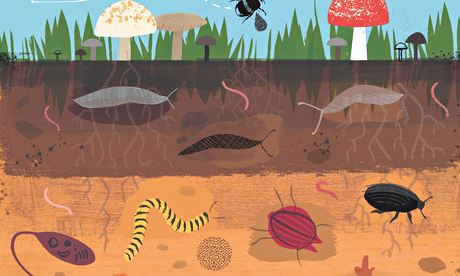
Some of the planet's most valuable and important ecosystem services are derived from soil ecosystems. Distressingly, our stewardship of these systems is often laking. Check out this brief article in the Guardian: http://www.theguardian.com/lifeandstyle/2014/apr/04/gardens-soil-erosion
By the way Helen Babbs is an apt name for a British garden writer.
Monday, March 31, 2014
Severe, Pervasive and Irreversible

That's how a new UN report describes the impacts of climate change. Read details about the report in this BBC article: http://www.bbc.com/news/science-environment-26824943
Note the control panel at the top of the story that links to other related stories and analysis.
We are creating this problem. We will either solve the problem, or live with its consequences.
Wednesday, February 5, 2014
Storm Shelter

As the planet warms regional climates will change. The precise details of how and when this will happen are still sketchy, but there is considerable concern that these changes, when they do come, will put tremendous pressure on our food systems. There is some (still very preliminary) evidence that this is already happening. Part of our response to climate change needs to include what has been called adaptation. These are approaches to reduce the vulnerability of our systems (like agriculture) to changes in climate, as well as approaches to help people manage the impacts of these changes on their lives.
An example of adaptation is today's announcement by the White House of the creation of "climate hubs" around the country. Check out a story abut the announcement here:
http://www.washingtonpost.com/blogs/post-politics/wp/2014/02/05/white-house-to-unveil-climate-hubs-to-aid-farmers-across-country/?hpid=z4
Friday, January 24, 2014
A Cool Refreshing Coke

Friday, January 10, 2014
Free Park

Creating conservation areas that have more restrictive resource use regulations, limit the types of permissible activities, or limit access has become a very commonly used resource management tool around the world. But creating a park is easier said then done. This New York Times article describes the troubled effort to create a National Park in Maine: http://static01.nyt.com/images/2014/01/10/us/MAINE-2/MAINE-2-master675.jpg
Many of the pitfalls that have arisen in that case are all to common around the world. Also, actually getting a park to fulfil its intended goals can also be just as challenging as creating a park in the first place. Many conservation areas around the world exist as meaningless lines on a map where the rules designed to foster conservation and sustainable management are ignored, not enforced, or remarkably in some cases not even created or articulated.
The topic of parks as a land management tool is complex and there is a rich and active and debate about their design,management, and use. One bit of consensus that has emerged is that in order to be successful parks need to have a lot of support and buy-in from the people who live in and adjacent to the park or whose lives may be influenced in some way by its creation. You can see the need for that reflected in he NYT article.
Subscribe to:
Posts (Atom)