Sunday, April 6, 2014

Washed Away


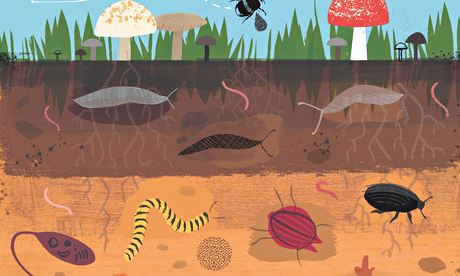
Some of the planet's most valuable and important ecosystem services are derived from soil ecosystems.  Distressingly, our stewardship of these systems is often laking.  Check out this brief article in the Guardian: http://www.theguardian.com/lifeandstyle/2014/apr/04/gardens-soil-erosion

By the way Helen Babbs is an apt name for a British garden writer.


Monday, March 31, 2014

Severe, Pervasive and Irreversible


That's how a new UN report describes the impacts of climate change.  Read details about the report in this BBC article: http://www.bbc.com/news/science-environment-26824943

Note the control panel at the top of the story that links to other related stories and analysis.

We are creating this problem.  We will either solve the problem, or live with its consequences.

Wednesday, February 5, 2014

Storm Shelter


As the planet warms regional climates will change.  The precise details of how and when this will happen are still sketchy, but there is considerable concern that these changes, when they do come, will put tremendous pressure on our food systems.  There is some (still very preliminary) evidence that this is already happening.  Part of our response to climate change needs to include what has been called adaptation.  These are approaches to reduce the vulnerability of our systems (like agriculture) to changes in climate, as well as approaches to help people manage the impacts of these changes on their lives. 

An example of adaptation  is today's announcement by the White House of the creation of "climate hubs" around the country.  Check out a story abut the announcement here:
http://www.washingtonpost.com/blogs/post-politics/wp/2014/02/05/white-house-to-unveil-climate-hubs-to-aid-farmers-across-country/?hpid=z4

Friday, January 24, 2014

A Cool Refreshing Coke


Efforts to reduce, mitigate, and plan for the effects of climate change have been hampered by intense political debates that often seem to have very little to do with the topic itself.  Yet, we ignore the issue at our peril.  It is telling that many corporations such as Coca Cola (as this article in the NYT  describes: http://nyti.ms/19Rp18y) are increasingly concerned about the impact climate change will have on their businesses.  For these companies, climate change is not an ideological touchstone but rather a tangible threat to their shareholders that they feel obligated to plan for and to help minimize.  The broader global society would do well to follow their lead.

Friday, January 10, 2014

Free Park


Creating conservation areas that have more restrictive resource use regulations, limit the types of permissible activities, or limit access has become a very commonly used resource management tool around the world.   But creating a park is easier said then done.  This New York Times article describes the troubled effort to create a National Park in Maine: http://static01.nyt.com/images/2014/01/10/us/MAINE-2/MAINE-2-master675.jpg

Many of the pitfalls that have arisen in that case are all to common around the world.  Also, actually getting a park to fulfil its intended goals can also be just as challenging as creating a park in the first place.  Many conservation areas around the world exist as meaningless lines on a map where the rules designed to foster conservation and sustainable management are ignored, not enforced, or remarkably in some cases not even created or articulated.

The topic of parks as a land management tool is complex and there is a rich and  active and debate about their design,management, and use.  One bit of consensus that has emerged is that in order to be successful parks need to have a lot of support and buy-in from the people who live in and adjacent to the park or whose lives may be influenced in some way by its creation.  You can see the need for that reflected in he NYT article.

Tuesday, October 29, 2013

Prairie Paradise


One of the implicit goals of ecosystem based management is to help foster communication and cooperation between natural resource stakeholders.  Part of its recent popularity is that it offers a potential way to diminish acrimonious and unproductive conflicts between stakeholders over how best to manage and use natural resources.  While the ecosystem based approach provides one potentially useful tool, the devil is always in the details.  Each management issue has its own unique historical, social,  political, and economic contingencies that can still make finding consensus difficult.  I think this story from the New York Times describes a good example of this: http://www.nytimes.com/2013/10/27/us/vision-of-prairie-paradise-troubles-some-montana-ranchers.html?smid=pl-share

It describes a privately organized and  funded effort to create a prairie reserve in Montana, and the backlash and concern this has created among some local residents.  On the face of things the goals and actions of both sides seem very compatible with each other, and yet there is still an ample amount of distrust and resentment on both sides.  The article implies this has more to do with the social backgrounds of the people involved than anything else. 

Monday, October 28, 2013

A New Agriculture?


Although I am a big fan of fruits such as apples.....not to mention wine..... most of the world is fed through the cultivation of annual crops.  This annual bias in agriculture dates back to our very first efforts at domesticating wild plants.   Converting a perennial plant into an annual one is one sure pathway to increasing yield.  Why do you think that is?  However, from a broader sustainability perspective annual agriculture can create some potential problems such as fostering soil erosion and requiring intensive energy inputs.  Some have argued that we might be able to create perennial versions of our staple crops that would improve the overall sustainability of agricultural systems.  Wes Jackson is probably the undisputed leader of this perennialization movement.  Check out this interview with him that just appeared in the New York Times: http://www.nytimes.com/2013/10/23/opinion/bittman-now-this-is-natural-food.html?smid=pl-share

The picture above is of Jerry Glover, a prominent crop perennialization researcher.  A story about him (with more cool pictures) is here: http://libarts.wsu.edu/nexus/issues/2010/02/jerry-glover.asp